
Urban Notes
Weekly Observations

January 11, Sunday
Three short Ogden Nash poems
There was an old man of Calcutta,
Who coated his tonsils with butta,
Thus converting his snore
From a thunderous roar
To a soft, oleaginous mutta.
The cow is of the bovine ilk;
One end is moo, the other, milk.
I didn’t go to church today,
I trust the Lord to understand.
The surf was swirling blue and white,
The children swirling on the sand.
He knows, He knows how brief my stay,
How brief this spell of summer weather,
He knows when I am said and done
We’ll have plenty of time together.
January 12, Monday

A female yellow-rumped warbler feasts on poison ivy berries. - Jim McCormick
I’ve been looking for yellow rumped warblers or as many call them, butterbutts, the only warbler that spends the winter in Ohio.
January 13, Tuesday
Today was my first day of classes. Instead of walking to class, as I did before we moved, I biked the 6.5 miles to OSU.
In Critical Writing taught by Professor Highley, a man from England, he mentioned that although he is not religious, he's happy to make accommodations for religious holidays that interfere with class.
“When I was young,” he said, “one of those Christians came knocking on my door and asked if I wanted to join a Bible study. I thought, sure, that sounds great. Several weeks later, when I asked her out on a date, she wanted nothing to do with it. That’s where my faith took a sharp downturn,” he explained. “That flat rejection was more than my faith could handle.”
He went on to say that he recently began attending a Methodist church, “I don’t think anyone there really believes in God. They’re there for the music and community. Still,” he said, “everyone should have some kind of spiritual practice.”
My classes this semester are Critical Writing: Representing Shakespeare, World Anglophone Literature (Afropolitans & Afropolitanism), Introduction to Film, English, and Literature for Adolescence.
January 14, Wednesday
One of the teachers at the school where I subbed today told me that her husband left her after his father died. They had been married for 15 years. In addition to the stress of losing his father, he had also shot and killed a man who had tried to break into their house.
An eighth-grade boy with Tourette’s told me that he likes to eat ketchup on his chocolate ice cream and his applesauce.
I was one of the adults in charge of recess duty for two periods. For the last week, one of the groups of students who come into the gym for recess has refused to sit down and be quiet, the way they are supposed to before they’re allowed to play. Because of this, they spend 20 minutes horsing around but are not given any play equipment. The gym teacher and other teachers cannot control the group.
Today, though, Miss Yoder, an intimidating woman with fierce eyes and the demeanor of a police officer came into the gym and began barking orders. She had a tremendous voice and a whistle. Anyone who talked or made a sound was overpowered by the noise she made. Within minutes, the wild group was settled into complete silence. She gave them stern playing instructions and handed out volleyballs and basketballs.
January 15, Thursday
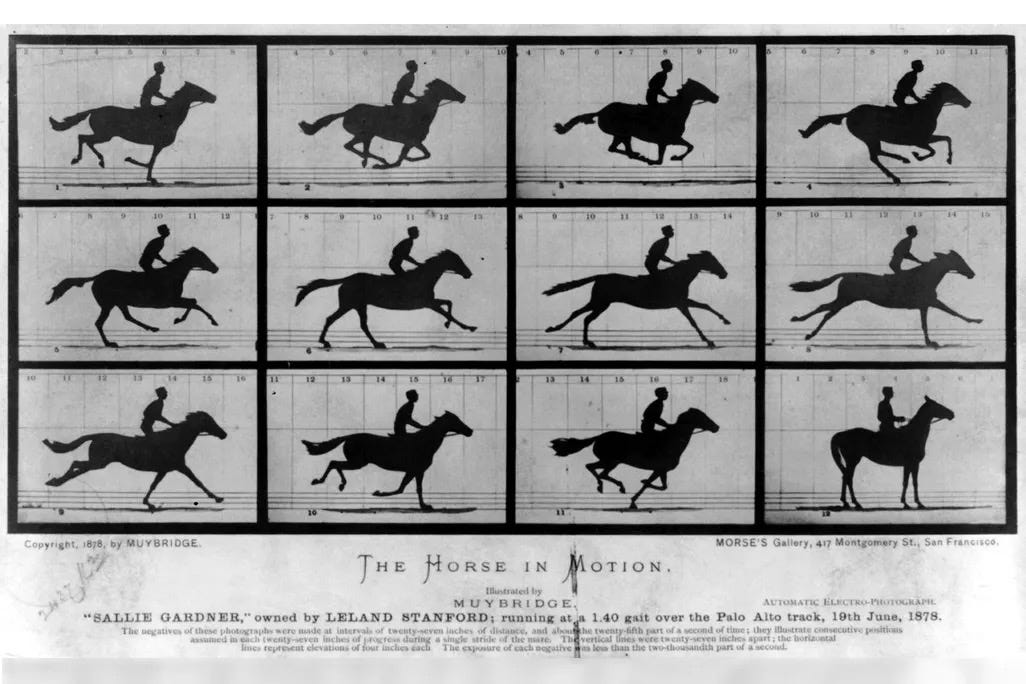
I didn’t know the story behind the famous horse in motion photographs until a class reading today.
In 1872, Stanford was a wealthy robber baron, former Governor of California, and horse racing enthusiast with way too much time on his hands. Spending much of that time at the track, he became convinced that a horse at full gallop lifted all four hooves off the ground. His friends laughed at the idea. Unfortunately, a horse’s legs moved so fast that it was impossible to tell with the human eye. So he turned to a nature photographer, Eadweard Muybridge, and offered him $25,000 to photograph a horse mid gallop.
Six years later, Muybridge perfected a technique of photographing a horse in motion with a series of 12 cameras triggered in sequence. One of the photos clearly showed that all four of the horse’s hooves left the ground at full gallop. Stanford won the bet and went on to found Stanford University. Muybridge pocketed the $25,000 and became famous for the invention of series photography, a critical first step toward motion pictures.
January 16, Friday
There’s a woman who often begs for money on a street corner close to where we live. She always has her dog with her. I’m not sure what breed it is but it has gray fur and is about the size of a Labrador. Usually it wears a comfortable looking winter coat but today she had a fuzzy flannel blanket draped over her dog.
Here are a few paintings I liked from the Cincinnati Art Museum I visited today.
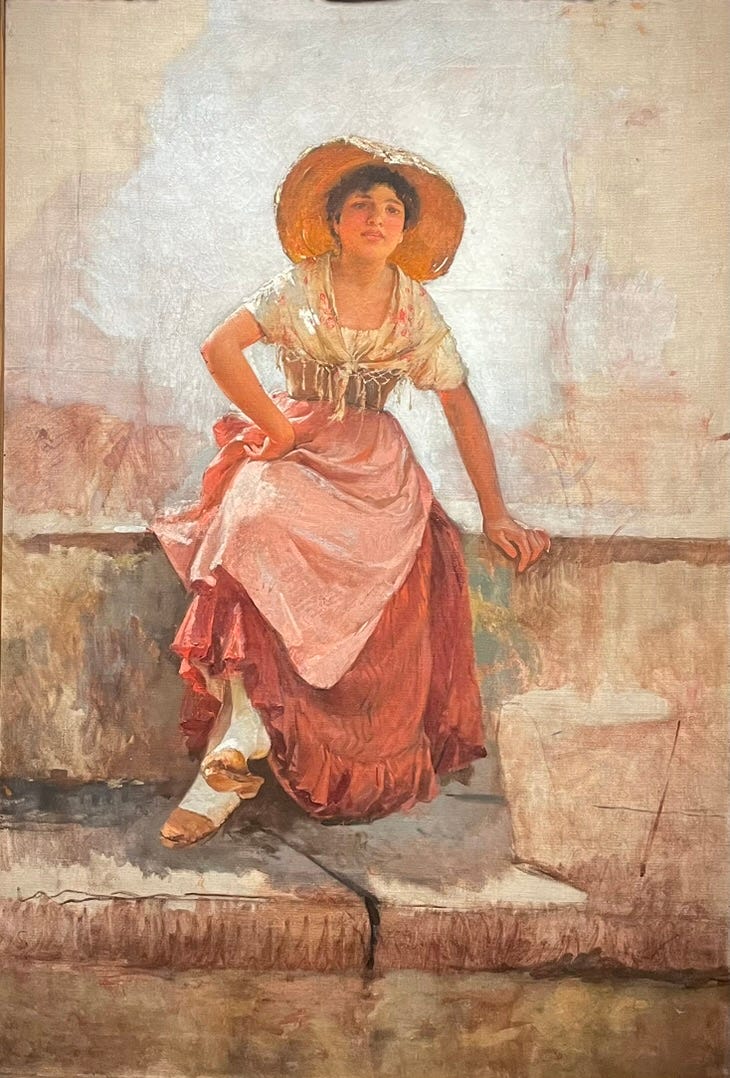
Frank Duveneck, 1848-1919 oil on canvas - Florentine Flower Girl
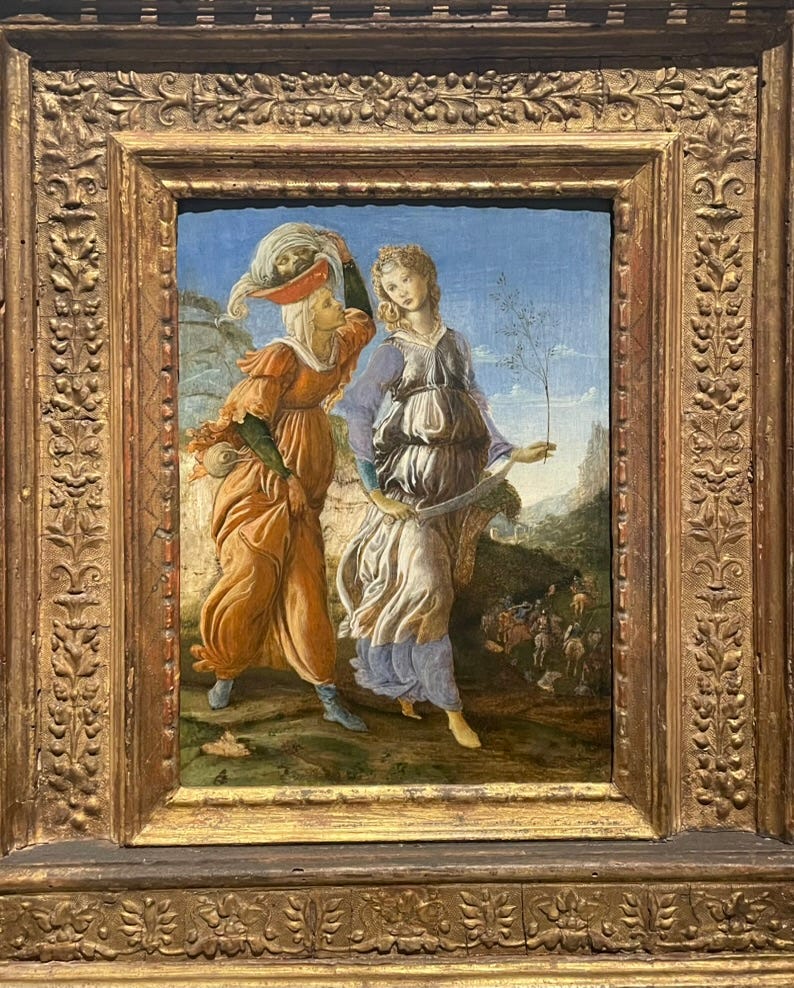
Sandro Botticelli (Italian, 1444/45–1510)
Judith with the Head of Holofernes, ca. 1469–1470
Tempera on panel
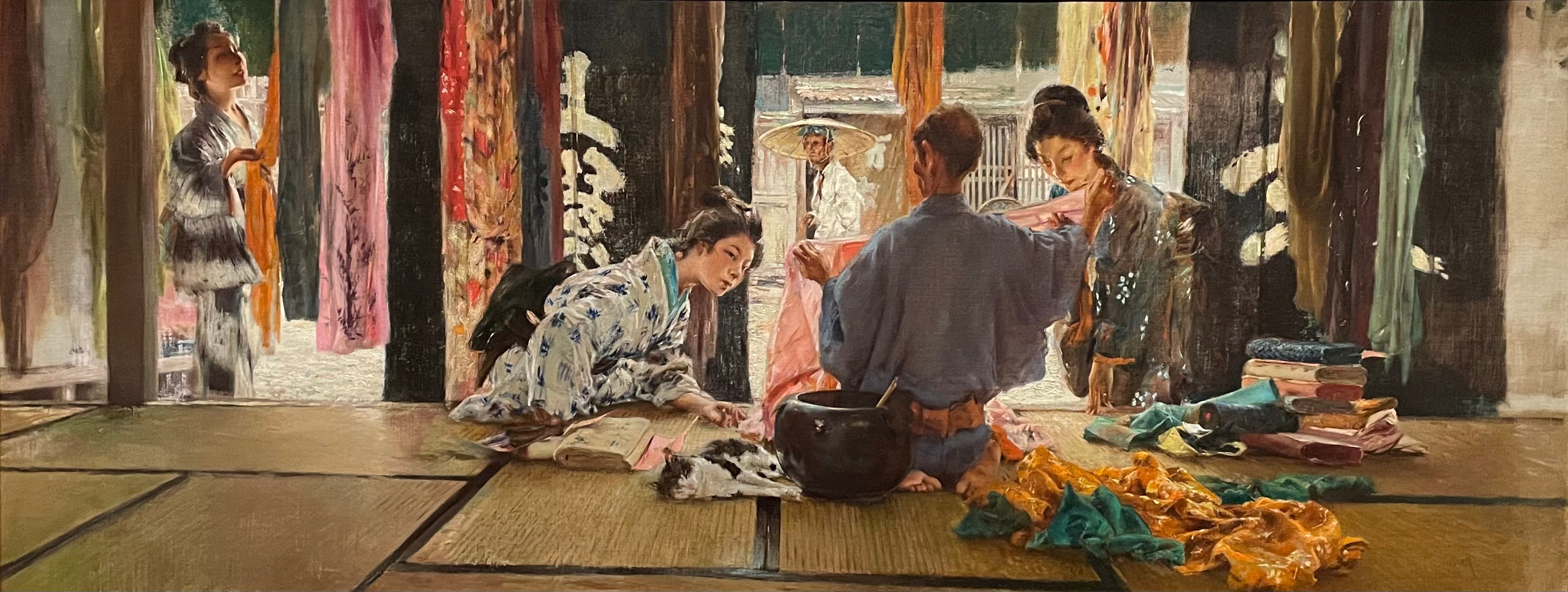
Rourick Frederick Blum (American, 1857–1903)
The Silk Merchant, Japan 1892 oil on canvas
January 17, Saturday
Yemuru, a man I met today from Ethiopia, said that when his father died his mother went into labor and gave birth to him prematurely. Ethiopian culture demanded that though she had just given birth, she must prepare for family that was coming to grieve her loss. While she was busy, his aunt, who thought he was a curse on the family, took him far away from the house and threw him into a garbage heap. Two hours later he was rescued by a slave girl who worked for the family.
When he was 12, his mother brought up the subject in the presence of the aunt. It was an awkward conversation because he had never heard the story before. His aunt was ashamed and didn’t want to discuss it but his mother insisted.