
Urban Notes
Weekly Observations

May 17, Sunday
Rachel’s Aunt Penny was just about to exit 71 to make a stop at our home when she was caught in a seven-car pileup. Thankfully, she wasn't hurt. She said all seven of the cars had out-of-state license plates. Traffic is very heavy right now due to the Sonic Temple festival.
Sonic Temple Art & Music Festival is a massive, four-day rock and heavy metal event held annually at Historic Crew Stadium in Columbus. This year, around 185,000 fans attended over the course of four days. More than 140 bands performed across five different stages. We used to live very close to where this festival takes place, and the sound was tiring. Even though we now live over five miles away, we can still hear it.
I read that the music could be heard from 10 to 12 miles away. During cool nights, a weather phenomenon called a thermal inversion often occurs. In an inversion, a layer of warm air traps a layer of cool air closer to the ground. When the massive stadium speakers blast sound upward, the waves hit that warm air boundary and refract back down toward the earth, acting like a megaphone and bouncing sound across the city.
The Origin of Museum Fatigue
Coined in 1916 by Benjamin Ives Gilman
Gilman used photographs to prove that poor display heights caused physical neck cramps and mental exhaustion.
Constant micro-choices about where to look, what to read, and when to move fry the prefrontal cortex.
Decoding unfamiliar, historic artifacts requires vastly more brainpower than viewing everyday objects.
Windowless rooms, dim lighting (to protect art), and hushed white noise mimic natural sleep environments.
The lack of an open visual horizon locks eyes into a tiring, near-focus state.
Hard gallery floors (marble, concrete, hardwood) send micro-jolts of impact up the skeletal system.
Slow shuffling and standing cause blood to pool in the lower extremities, creating a heavy, “leaden” leg sensation.
May 18, Monday
“I weigh 62 pounds,” a six-year-old told me, “unless I just went to the bathroom. Then I weigh only 61 pounds.”
“I’ve been going to this school for six years,” a first grader said. “I started in kindergarten.”
“Wouldn’t that be two years, then?” I asked.
“Yeah, it was either six or two. I’m not sure.”
I was convinced by a few second graders to run a race with them at recess. After we finished, a student said, “I didn’t know teachers can run. My mom can kind of run, but she falls if she runs too much.”
The four-year-old girl that Rachel and I are caring for right now has begun calling me “bro.” This started when she began preschool. It’s funny now, but I’m sure I’ll get tired of it.
“My 16-year-old daughter calls me ‘bro,’ and it drives me crazy,” my boss told me recently. “It makes me want to throw her through the living room window.”
May 19, Tuesday
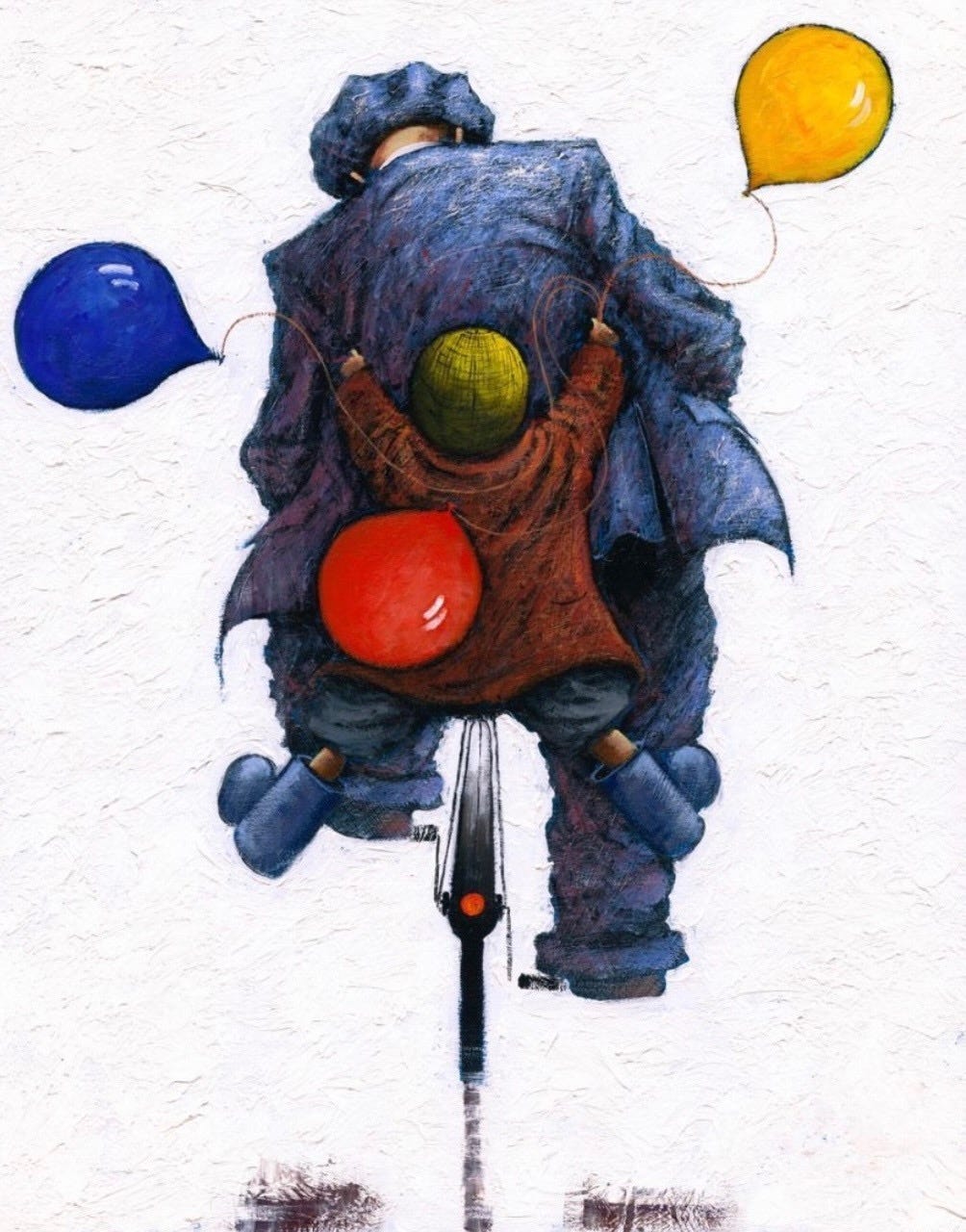
Alexander Millar, Hopes and Dreams
May 20, Wednesday
Here are some historical insomnia remedies I read about in Mental Floss magazine.
Cold Apple on the Head: Tudor Era (1485–1603)
People believed apples possessed natural cooling, sleep-inducing properties that could soothe a restless brain.
Dormouse Fat on the Feet: Elizabethan Era (1558–1603)
Because the dormouse is a deep hibernator, people believed that transferring its fat onto a human would also transfer its sleep powers.
Vinegar-Soaked Bread on the Feet: Early Modern / Stuart Era (17th Century)
Doctors thought the acidic mixture would draw “vapors” and heat away from the head to encourage rest.
Cow Dung at the Foot of the Bed: Georgian Era (18th Century)
The manure was used as a repellent to keep biting swamp insects away from the sleeper.
Sliced Onions Beside the Bed: Tudor to Victorian Eras (16th–19th Century)
Based on miasma theory, people believed the open onions would absorb airborne illnesses and toxic gases while they slept.
Lettuce Opium: Victorian Era (19th Century)
The milky sap of wild lettuce contained sedative compounds that acted as a milder, non-addictive substitute for actual opium.
May 21, Thursday
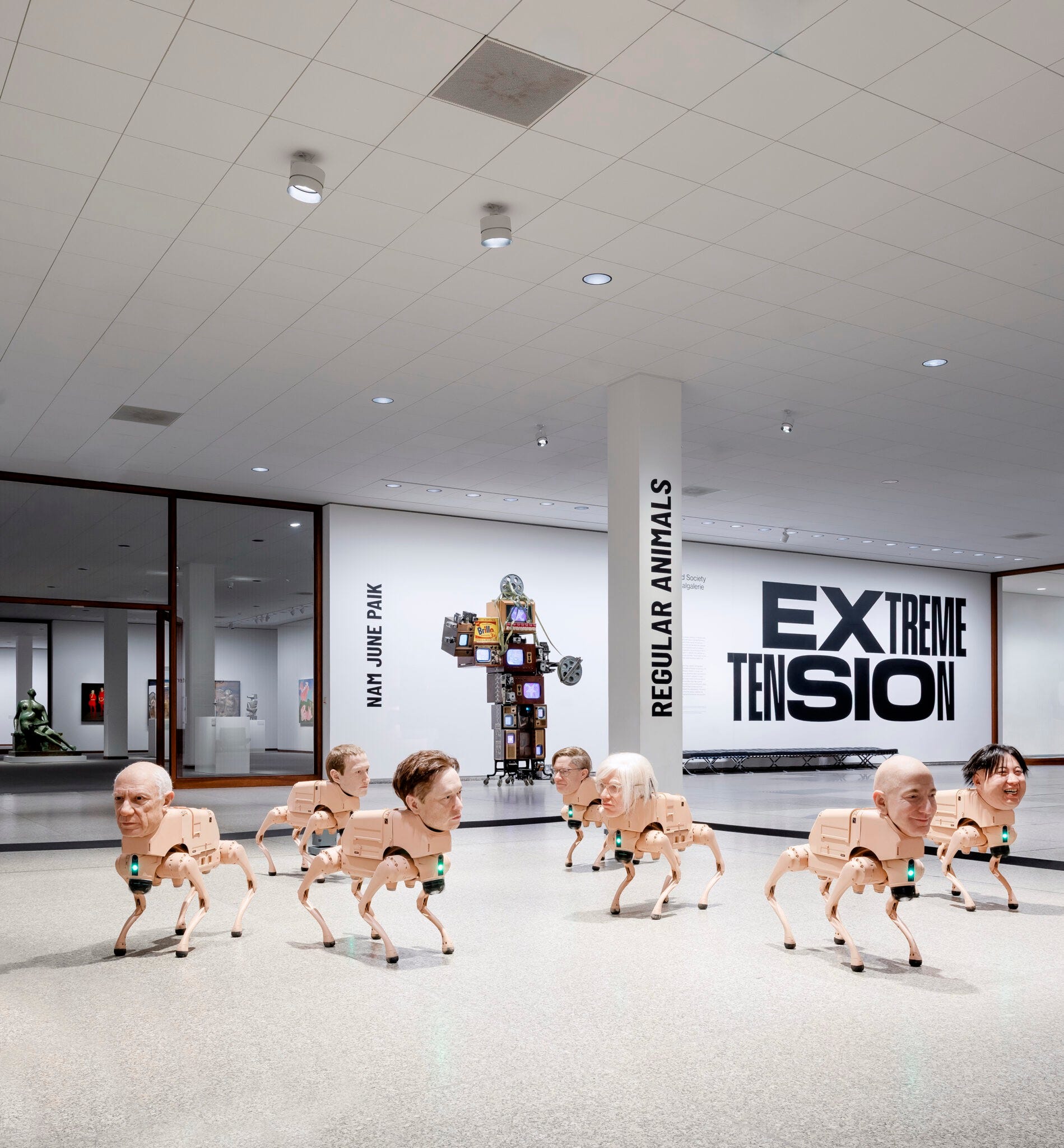
Beeple’s new art installation, Regular Animals, at the Neue Nationalgalerie in Berlin.
Beeple (Mike Winkelmann) created robotic dog-like sculptures with hyper-realistic human faces including Elon Musk, Mark Zuckerberg, Jeff Bezos, Andy Warhol, and Pablo Picasso. The dogs wander around awkwardly, interact with visitors, and even print Polaroid photos from their rear ends.
Although the robots look advanced, Beeple says they don’t really use AI to learn, they mainly just avoid bumping into things.
The museum presents the work as a reflection on technology, AI, and humanity’s future, suggesting we may not be fully prepared for what’s coming.
May 22, Friday
Vessel with Two Feet, ca. 1000–800 BCE
BY SHIREEN MADON
It’s as though the birds all know each other, and how naively
they seem to believe the world will go on. The swans oh-so-sweetly
in their museum-white, yet all anger and sinew like teen girls,
believing they own all of this, our planet, the greens and blues, until
they gorgeously realize they have been neglected. The crows—
their feathers touched with the most purplish verbena purples
of a sunrise over a smoked sky—know otherwise.
They seem to have known the fate of things before we did.
Have you never heard them awake at the crack of dawn? What
else do you think they have been preparing for, if not the end?
In the Brooklyn Museum, there is a Vessel with Two Feet from
which wine was drunk in Ancient Persia, when my people were
still there, finding a religion. Wine would be poured into the clay
vessel from above and flow out from holes in two actual feet
at the bottom. It appears to be the bottom half of a pregnant woman,
but only to me. Drinking from these little legged vessels
was said to remove the drinker’s grief, and what are artifacts
if not the misunderstandings of a happy life. The plaque helpfully
reminds us that a vessel with holes on the bottom would not be
practical for storage. On the rooftop across from our apartment, where
just last week a twenty-something danced a primeval dance for TikTok,
we watch a pair of crows make a nest in a cracked plant pot.
May 23, Saturday
I watched a squirrel chew through the parachute cord that suspends the bird feeder from a large tree. The feeder and the squirrel dropped to the ground. City pests are bold and relentless. I had to hang the feeder high off the ground to keep deer from eating from it.